
Red Alert
An Ideological Analysis

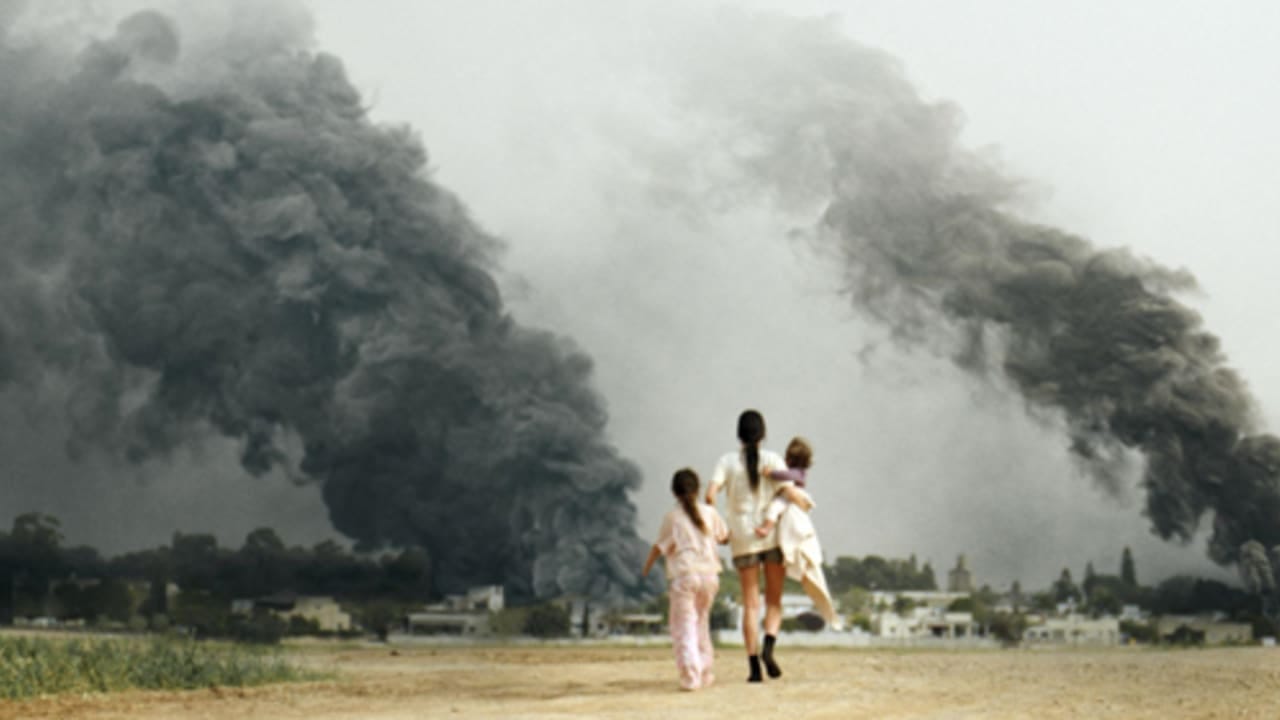
I just finished watching the excellent Israeli mini-series Red Alert (known as Or Rishon or First Light in Israel) on Paramount. First, everybody should watch it. Second, if you expect to appreciate the full magnitude of October 7 from it, don’t. Despite being based on actual people and events, all of whom are named in the last episode, this is a very cleaned-up version of this watershed calamity. What is not shown: rapes, desecration of corpses, killing of children and families, abduction of elderly and sick. You can see all of this on Hamas’ own footage available online. Few would, though, because there are some sights that you cannot unsee. So, I do not fault the creators of Red Alert for not displaying the full extent of the savagery on that day. They wanted to create a popular narrative, and they did. But there is also danger in the way they arranged their stories. I call this danger the Anne Frank effect. So let me show how Red Alert created its narrative, and then I will talk about what is gained and what is lost by doing it the way they did.
Selection. Every storytelling based on real events begins with selection. Since it is impossible to tell everything, only crucial or representative events need to be chosen and woven into a narrative. But who decides what events are crucial or representative? This is were ideology comes in (see my previous post here). The distinction between what Donald Spence called narrative truth and historical truth is what provides professional historians with jobs.
In Red Alert, the four stories chosen to represent the unimaginable scope of October 7 are of Nofar and Kobi, a policewoman and a counter-terrorism officer husband and wife; Tali, a kindergarten teacher who turns her car into a makeshift ambulance; Bat Sheva and her three children, one of whom is abducted into Gaza; and Ayub, a Gazan whose wife is killed by Hamas. The first thing to note is that all four stories have a (sort of) happy ending. Nofar is wounded at the Nova festival but is rescued by Kobi; Tali’s gravely wounded son survives; Bat Sheva’s husband is abducted and murdered but her son survives and is returned; and Ayub saves his infant son and gets his Israeli residence to bring up his nine children in safety. Again, all of these are real stories, including the last one (more on Ayub later). But why are they more representative than the story of Shani Louk, brutalized by Hamas on tape or of Ruth Peretz, a teenager with cerebral palsy murdered with her father at the Nova festival? They are, if you want to deliver a message of hope, national unity and heroism, which is what Red Alert does.
Point of view. An important component of narrative is point of view. Who is the voice that speaks? What is the eye that sees? Red Alert, having a quasi-documentary format, does not have an overarching narrator but the way the stories are presented, with the strong focus on individual choice, bravery and resilience, creates an imaginary collective point of view, which is both the Israeli mainstream, proud of its heroes, and the implied American audience who can empathize with parents saving their children and husbands rushing to defend their wives.
Protagonists. The choice of the protagonist(s) is the most important one a narrative creator can make. If people hate your protagonist, chances are they will not be receptive to your message. The four protagonists of Red Alert are carefully chosen to represent Israel as it really is: a multicultural, multiethnic, but unified society. Tali is a Mizrahi Jew living in an impoverished “development town” (Ofakim) that had been the target of Hamas rockets for years (a frequent complaint against the government was that the poor Jews of the South had been abandoned to these attacks as opposed to the wealthy Tel-Avivians). Bat Sheva and Ohad are kibbutz members, members of a left-leaning, quasi-socialist community. There are Ethiopian, Mizrahi and what appears to be a Druze soldier in Kobi’s elite unit. Tali’s husband, appearing in one episode, wears a kippa but there are very few signs of religiosity. And there is Ayub. The American media don’t quite know what to make of him, but it seems clear to me that he is a Gazan Bedouin married to an Israeli Arab citizen who lives in Israel but cannot get a residence permit. When he is stopped by Israeli soldiers, he proves to them that he is “one of us” by showing them a slip from the Israeli well-baby clinic (Tipat halav), which is an integral part of Israeli lifestyle. His pivotal role is central to the series message: the war is between Israel and Hamas, not between Jews and Arabs.
So, is there any problem with this series besides the fact that it does not show the full extent of the October 7 atrocities? Yes, but it is unavoidable. It is the Anne Frank effect: the danger of universalizing Jewish catastrophes, such as the Holocaust and October 7, by stripping them of their historical and political context. Why is The Diary of Anne Frank the go-to text in Holocaust studies in the US? Because it is about a young girl and her individual tragic story. It is not about the rabidly antisemitic ideology of Nazism. It is not about the Dutch collaborators and traitors. It is not about the complex political configuration of World War 2 where you had to make a common cause with one butcher (Stalin) to fight a worse one (Hitler). So it is easy to discount this historical context and Anne’s own Jewishness and to make it into a “universal” tale. And the next step is the grotesque images we have seen of Anne Frank in a keffiyeh.
Red Alert does not lend itself easily to this kind of fake universalizing. It is an Israeli tale. But it is still heavy on individual heroism and survival rather than on the context of Israel’s being attacked by a murderous Islamist cult. Some of the subtleties of the protagonists’ identities that I talked about may be lost on the American audience. So, I wish more people would use Red Alert as a starting point for understanding the complex reality of Israel’s survival rather than a final account of October 7. Of course, the usual suspects would discount it as “propaganda”. But all fiction is propaganda in some form or another. The important question is: what is it propaganda for? If you do not see the moral and political difference between Israel and Hamas, you are too far gone for conversation. But if you actually trying to figure out the fractured reality of the Middle East, Red Alert may be a good starting point.